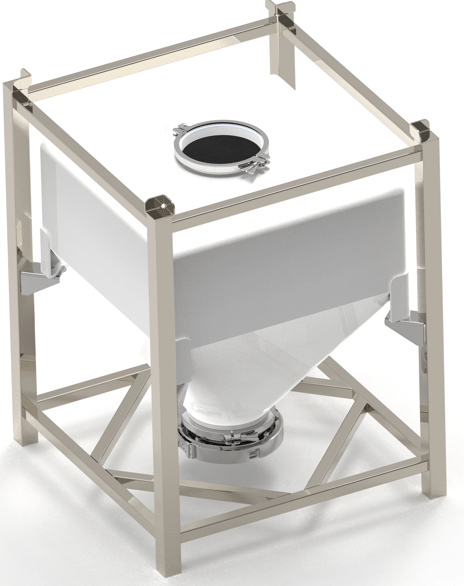
 For corrosive media, expensive materials such as Halar (E-CTFE) or Hastelloy do not always have to be used for safe storage, transport or further processing. What would trigger galvanic or electrochemical corrosion in standard IBC stainless steel container is not a problem in tanks made of PVDF.
We have recently acquired a new extremely stable material for aggressive media such as chlorine-containing solvents or acids and alkalis. PVDF coating (polyvinylidene fluoride) is a semi-crystalline fluoropolymer that offers a unique combination of high resistance, mechanical stability and good processability.
The most important advantages at a glance:
- Chemical resistance: PVDF coating is highly resistant to strong acids, bases, salts, many solvents and chlorine-containing compounds.
- Temperature resistance: Can be used in a wide range from approx. -40 °C to +150 °C.
- High mechanical strength: Significantly harder, stiffer and more compressive than many other fluoropolymers such as PTFE, making it well suited as a self-supporting construction material.
- Weather and UV resistance: Very good ageing resistance to sunlight and weathering; also flame retardant (self-extinguishing).
- Ultrapure water compatibility: Releases hardly any substances into media and is therefore preferred in semiconductor, cleanroom and medical technology for ultrapure water systems.
- Good workmanship: Compared to fully fluorinated plastics, PVDF is comparatively easy to weld, machine or process by injection molding.
- Typical areas of application (e.g. containers, pipelines, membranes, batteries, etc.)